12 Reasons the Same Haircut Looks Amazing on Her and Awful on You
You saved the photo, showed it to your stylist, and left the salon feeling great. Then you washed your hair at home and the magic was gone.
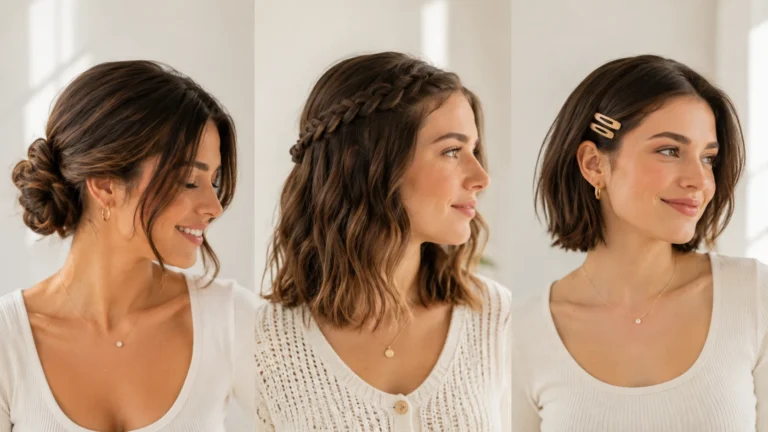
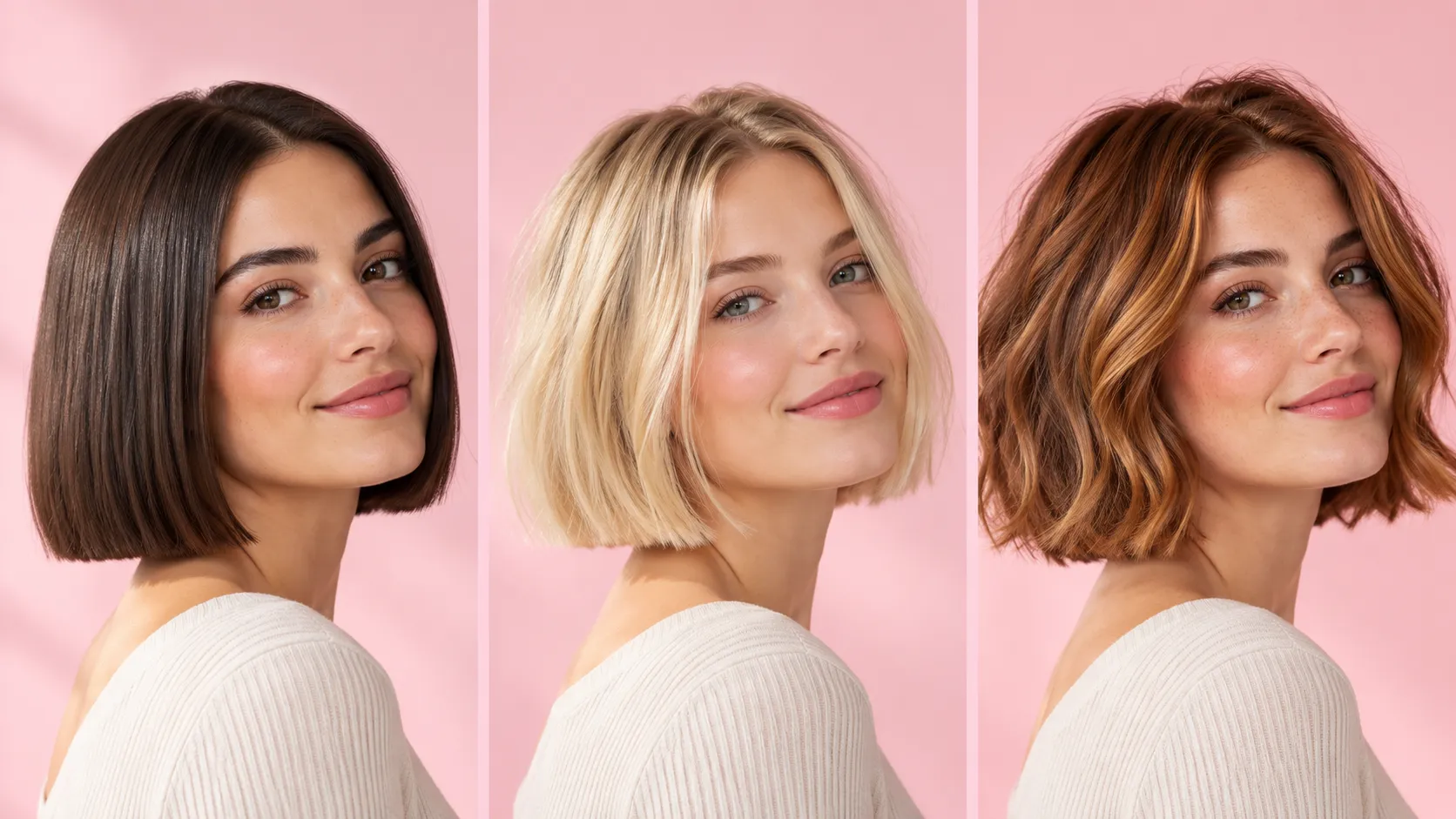
It is a frustrating thing, and it makes you wonder why the same haircut looks amazing on her and awful on you. Most people blame themselves, the stylist, or their hair in general. The real answer is usually less personal than that. A haircut is not one thing you can copy. It is a shape that depends on your hair texture, how much hair you have, where your hairline sits, how your head is built, and how you style it each morning.
Common advice says to match your face shape and you will be fine. That is only one piece of the puzzle, and often the smallest one.
Below are 12 specific reasons a cut lands so differently from one head to the next. Each comes with a quick visual so you can check your own situation and walk into your next appointment knowing what to ask for.
1. Her Hair Texture Behaves Differently Than Yours, Even With the Same Cut
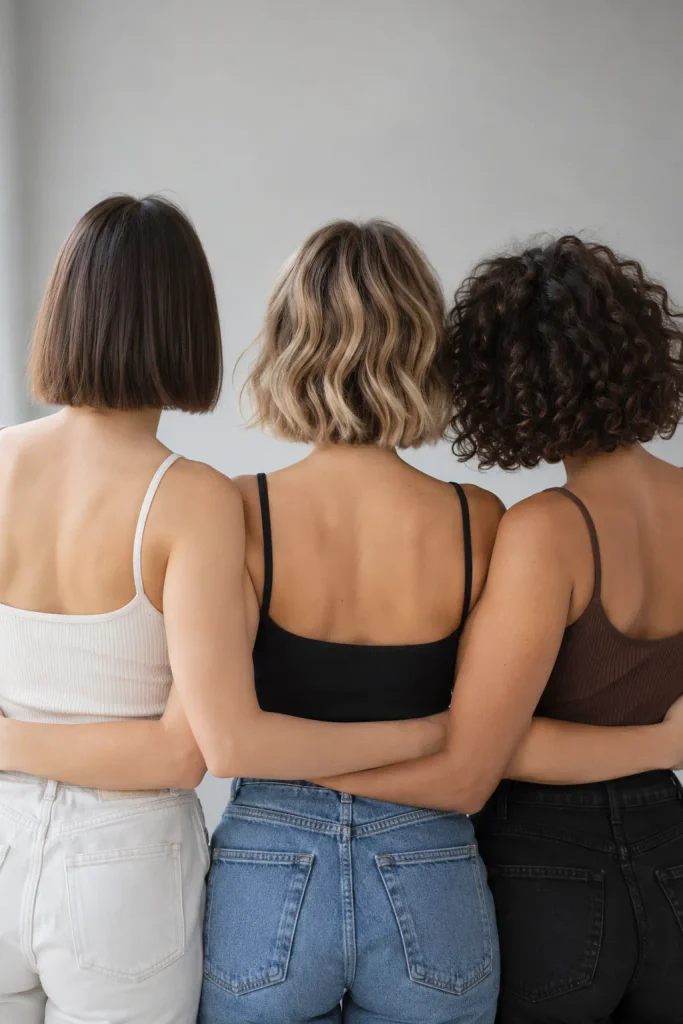
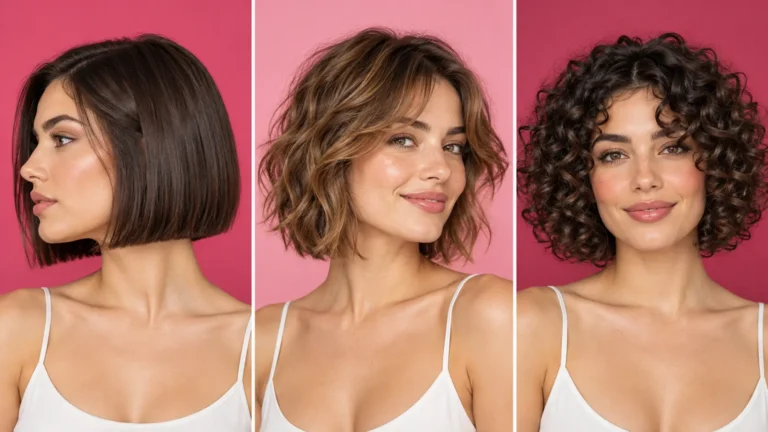
Take a blunt bob. On straight hair it falls like a ruler line. On wavy hair the ends bend outward. On curly hair it can spring up and sit much wider and shorter than it looked in the photo.
Texture changes three things:
- How long the cut looks once it dries
- How much shape it holds without a styling tool
- Whether the edges look sharp or soft
Before you book, tell your stylist your pattern and ask how the cut will behave on it, not on the hair in your photo.
2. Hair Density and Strand Thickness Decide Whether Ends Look Soft or Stringy
Saying “I have fine hair” can mean two different things.
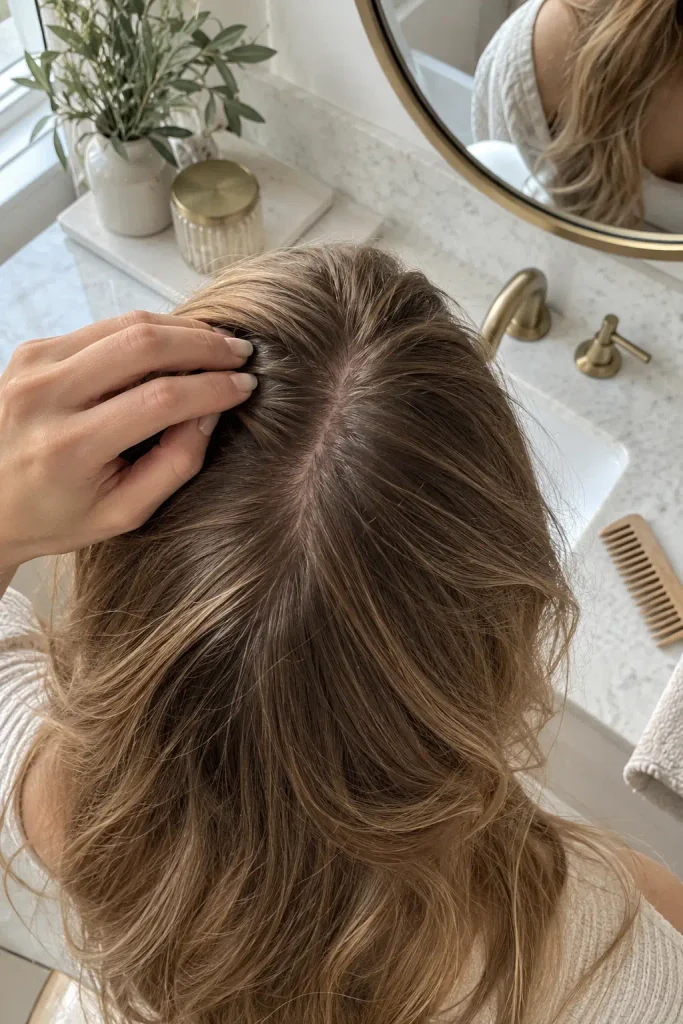
Strand thickness is how wide a single hair is. Density is how many strands grow from your scalp. Someone can have thin strands and a lot of them, so her blunt cut looks full. You might have the same thin strands but fewer of them, and the same cut looks see through at the bottom.
Not sure which one you are? Part your hair in the mirror and check how much scalp shows.
Know which one you have before you pick a length.
| Cut | Dense or thick hair | Fine or low density hair |
|---|---|---|
| Blunt bob | Looks full and sharp | Can look see through at the ends |
| Heavy layers | Removes bulk and adds movement | Can leave the ends wispy |
| Long and one length | Hangs smooth and heavy | Can look flat and thin at the bottom |
3. Face Shape Changes Where the Cut’s Lines Land on You
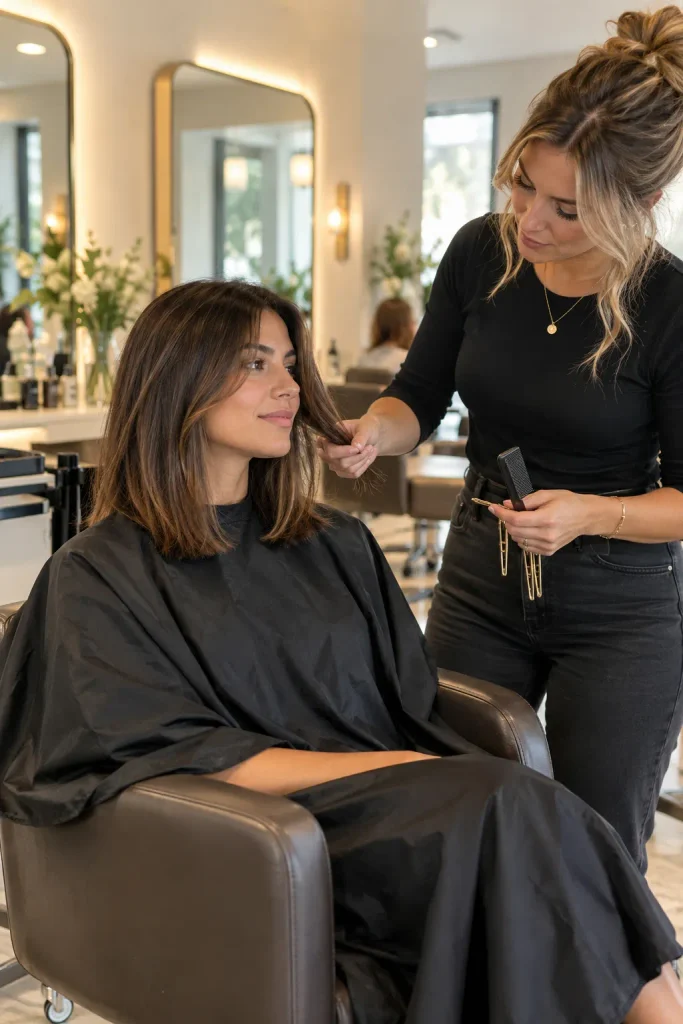
Every haircut draws lines around your face.
The length, the volume, and the bangs each stop at a certain spot. On her, those spots may sit right where her face is narrow. On you, they might land at the widest part of your jaw or cheek.
- A chin length bob frames a narrow jaw and can highlight a wide one.
- Side swept bangs soften a strong forehead but can cut across a small one.
Ask where the shortest point will land on your face before the scissors come out, because that spot is hard to undo.
Ask where the shortest point will land on your face.
Put volume where your face is narrowest.
Copying a cut that ends at your widest point.
Choosing a cut from a face shape label alone.
4. Your Forehead, Jaw, and Neck Length Matter More Than Face Shape Labels

A face shape chart is a starting point, not a plan.
Two people can both be called oval and still have very different foreheads and necks. Forehead height changes how bangs sit. Neck length changes how a short nape feels. Jaw width and ear position change where a cut looks balanced and where it looks off.
Charts skip these details because they are harder to draw. A good stylist will notice them, so ask what they see.
Once you know your own proportions, any reference photo gets easier to judge.
Mirror check before you book
5. A Cowlick or Strong Hairline Can Fight a Cut That Works Fine on Her
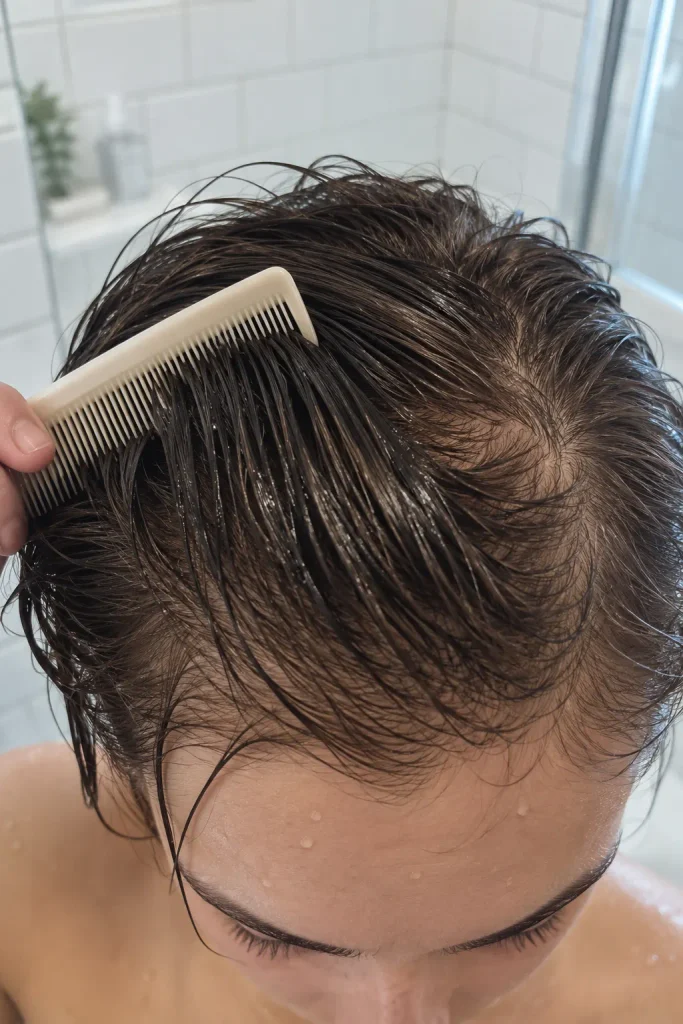
You get the bangs, and by lunch one side is standing straight up.
That is usually a cowlick, a spot where hair grows in a different direction from the rest. A strong hairline does the same thing. A widow’s peak, high temples, or a low nape can push hair sideways no matter how you cut it.
The usual trouble spots:
- Front hairline, where bangs split or lift
- Crown, where short layers stick out
- Nape, where short hair flips
A stylist can cut around these patterns, often by leaving bangs longer so their weight helps them lie flat. Ask them to check your growth direction while your hair is damp.
Dry your bangs side to side while damp to train them before you smooth them down.
Short, blunt bangs cut straight across a cowlick. They split or lift by midday and need a hot tool every morning.
Longer, side swept bangs cut with the growth direction in mind. The extra weight helps them lie flat and dry the way they fall.
6. Which Side She Parts Her Hair Changes the Whole Look
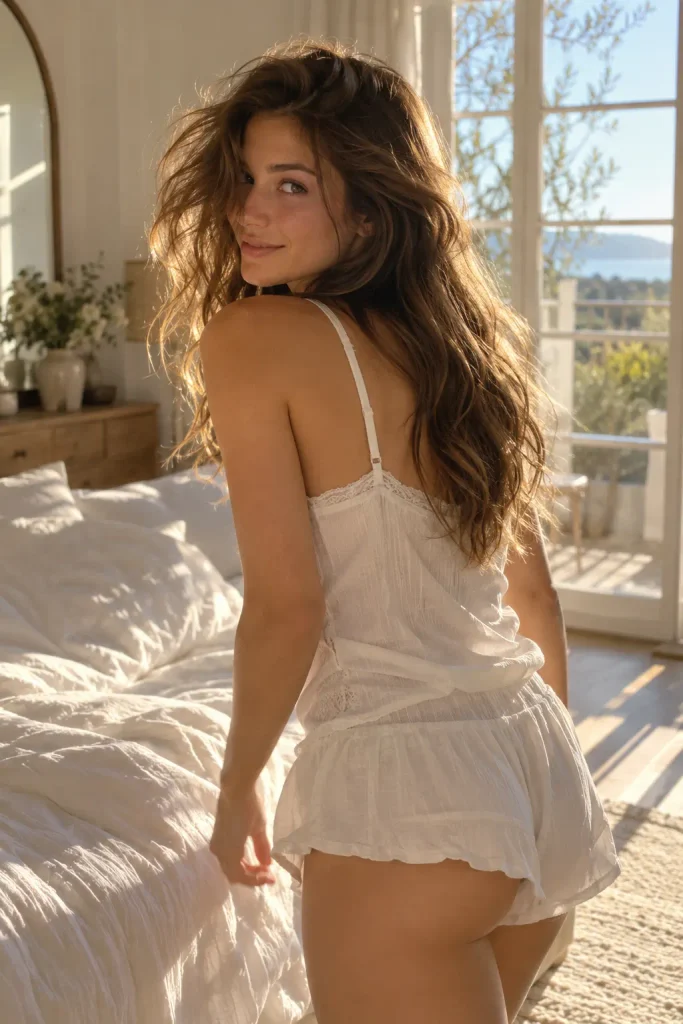
Your hair already has a favorite side. Fight it and the cut never sits right.
A part moves weight around. That weight decides how layers fall, which way bangs sweep, and how much lift you get at the crown. If she parts on the left and you force the same part onto a head that wants the right, the cut can flop, split, or lie flat in the wrong spot.
Try this quick test to find your natural part:
Brush your dry hair back, flip your head upside down, and give it a gentle shake.
Stand up slowly without touching it. Let it fall wherever it wants.
Note where it splits, then tell your stylist so they cut for that side.
7. Her Hair Color Makes the Layers Visible, and Yours May Hide Them

Zoom in on the reference photo and look at the color, not the cut.
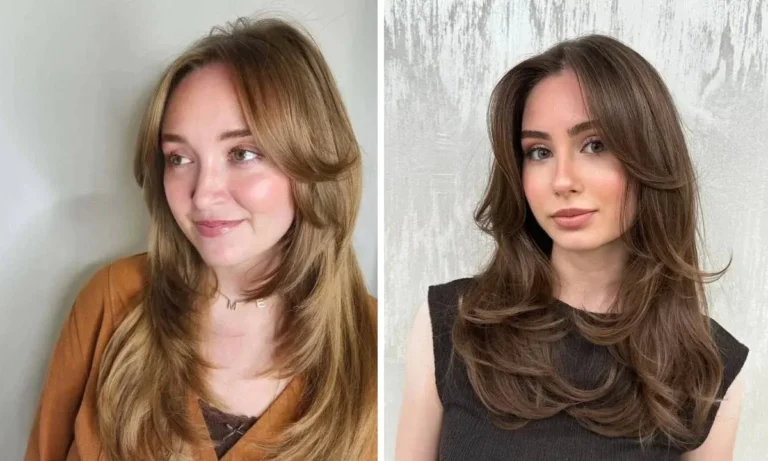
Highlights, balayage, and mixed tones make every layer catch light on its own, so the shape reads clearly. On one flat shade, especially a solid dark or a solid very light one, the same layers can blend into a single outline.
Your cut will not fail. It will just look softer on you than it does on her.
If you want that definition, ask about a gloss, a few face framing pieces, or a cut that relies on strong shape instead of contrast. Your stylist can show you where a little dimension would help most.
Layers show up through color contrast. On one flat shade, pick a cut with clear shape or add a little dimension.
8. The Reference Photo Was Styled, Lit, and Possibly Edited

A saved photo is not how that hair looks on a normal Tuesday.
It is a single frame from a shoot or a good hair day, picked out of many. What you see is the best version, and a lot of it has nothing to do with the haircut. Keep that in mind before you decide the cut is the thing that failed you.
- ▸Heat tools and styling products used right before the shot
- ▸Lighting and angles that add shine and hide thin spots
- ▸Clip in extensions or hair pieces added for fullness
- ▸Filters and editing that smooth frizz and flyaways
- ▸One best photo chosen from dozens of tries
9. Her Stylist Adjusted the Cut to Her Head, Not Just the Name on the Photo
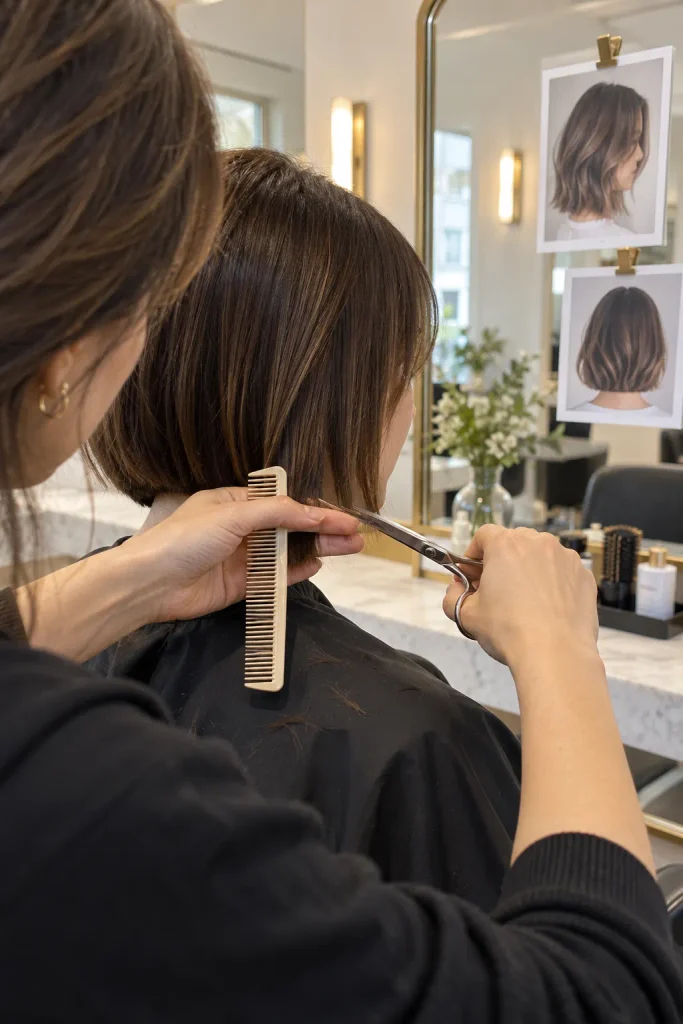
A name like “lob” or “shag” is a loose category.
Under each name sit many versions. Her stylist probably shifted the length to suit her jaw, left weight in or took it out based on her density, and angled the cut around her hairline. The result got the same name as your photo, but the cut itself was made for one head.
Bring two or three photos and say what you like about each one, such as the length, the fringe, or the movement. That gives your stylist something to tailor instead of copy.
10. Her Cut Works Because of a Styling Routine You Never See
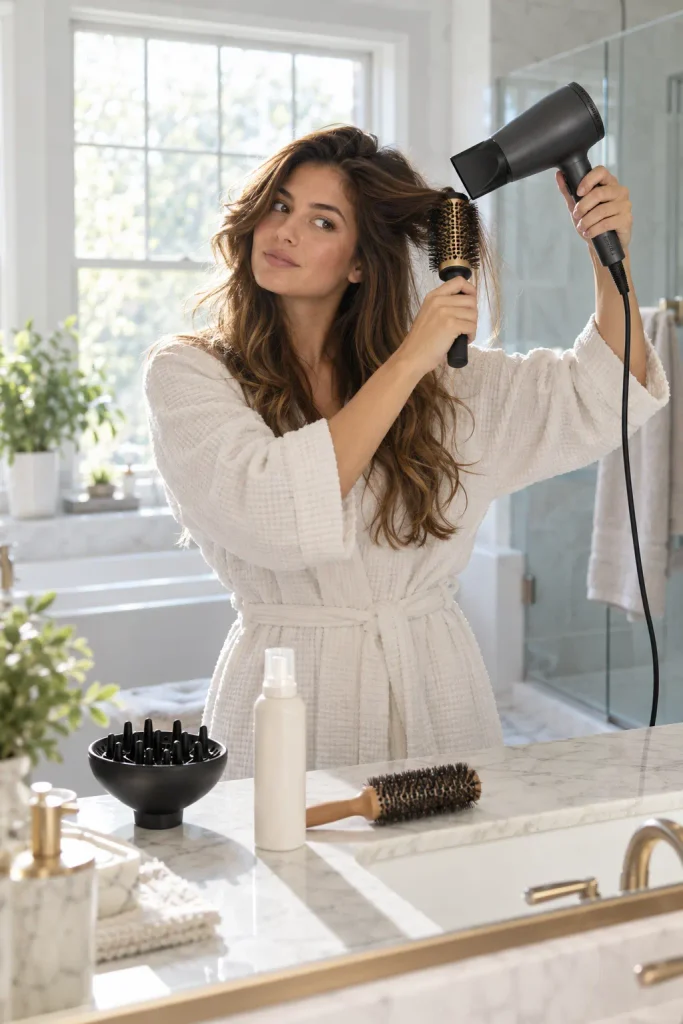
Ask her what she does in the morning and the answer is rarely “nothing.”
Many cuts that look effortless depend on a blow dry method, a round brush, a diffuser, or a bit of product worked in at the right moment. The cut gives the shape, and the routine finishes it. Without the routine, the same cut can look flat, frizzy, or shapeless.
Before you commit to a style, ask your stylist how they would dry and finish it on your hair, and which tools they would use.
Be honest about the time you will really spend. A cut that needs a long routine will look worse on you than a simpler one you actually do.
11. Damaged or Dry Ends Make Any Cut Look Off
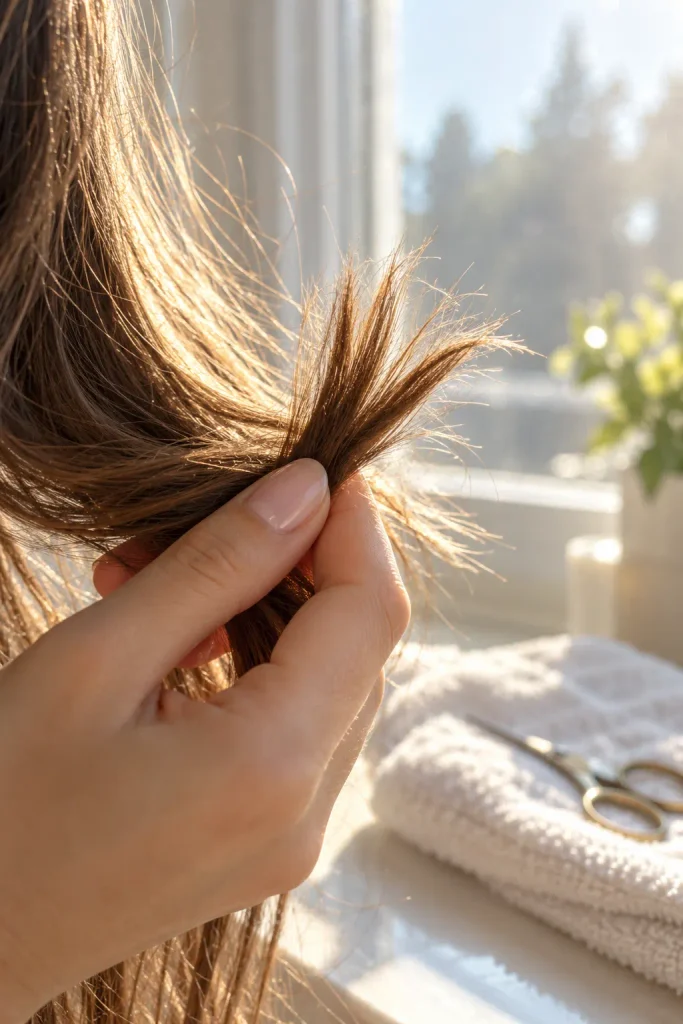
Hold a strand up to the light and look at the last few inches. If they look frayed or rough, the cut cannot show its shape.
A sharp line needs ends that look even and sealed. Damaged ends puff out, split, and break at different lengths, so a clean edge turns fuzzy. Her ends may be healthy, or freshly trimmed, which is why the line in her photo looks so crisp.
Signs your ends are working against the cut:
- White dots or splits at the tips
- Ends that tangle more than the rest of your hair
- A hemline that looks uneven even right after a trim
Ask your stylist whether a trim or a conditioning treatment should come before the new cut.
⚠️ Watch Out
Skipping trims to grow hair longer can backfire. Damaged ends that stay on will break off later and leave the cut thinner and shorter than you planned.
12. She Got the Cut Last Week, and You Are Eight Weeks Out
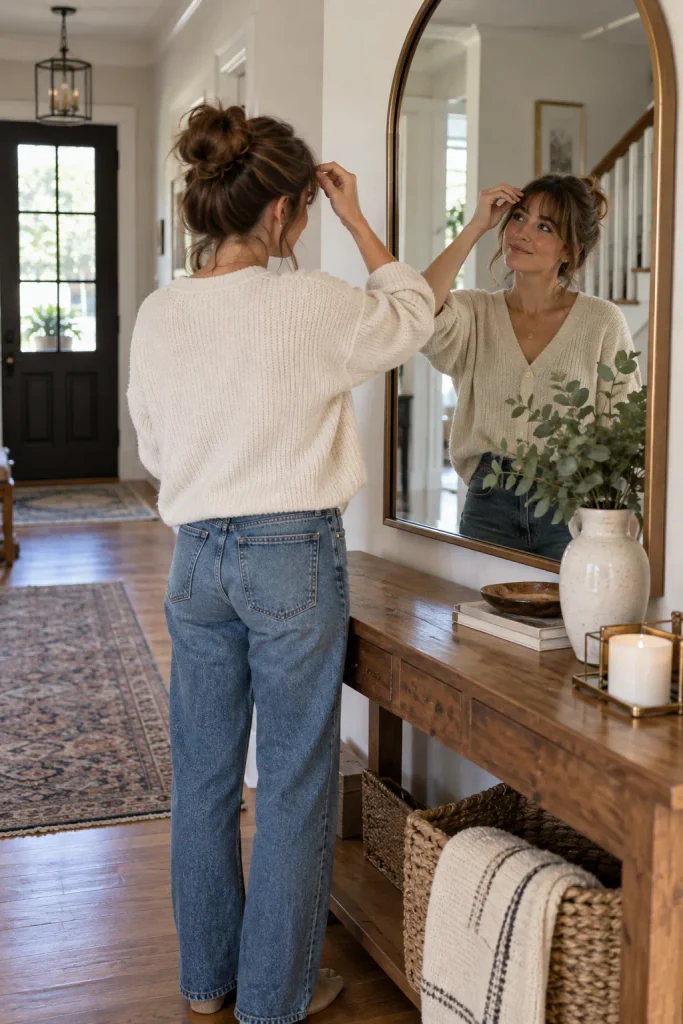
Salon photos are taken the same day as the cut. Yours is being compared to them two months later.
A fresh cut has clean edges, a clear shape, and weight in the right place. As hair grows, that shape loosens. Bangs reach your eyes, layers lose their lift, and a bob drifts past the jaw it was cut to frame. Hair grows at different speeds, so some people see the change sooner than others.
Ask your stylist how often this exact cut needs a trim. Short, precise cuts usually need visits sooner than long, soft ones.
Book your next appointment before you leave the salon, so the cut never gets far from its best shape.
| Fresh cut | Weeks later |
|---|---|
| Edges look sharp and even | Edges soften and look blurry |
| Bangs sit above the brows | Bangs poke into your eyes |
| Layers lift and move | Layers hang flat and heavy |
| Length frames the jaw | Length drifts past where it was planned |
Conclusion
The next time a photo makes you wonder why the same haircut looks amazing on her and awful on you, remember that the cut was only one part of what you saw. Her texture, density, hairline, color, styling routine, and trim schedule all helped shape that result.
Your hair has its own version of each of those. Know your hair, tell your stylist the details, and ask how the cut will behave on your head instead of hers. That one conversation does more than any face shape chart ever will.
Before you book your next cut
Frequently Asked Questions
Why does the same haircut look amazing on her and awful on me?
A haircut is shaped by the head it is on. Texture, density, hairline, color, and styling all change the final look. Her cut was also likely adjusted for her. Yours can be too, once your stylist knows these details.
Does face shape really matter when choosing a haircut?
It helps, but it is only one piece. Where the length stops, how tall your forehead is, and how long your neck is can matter just as much. Use face shape as a starting point, then ask your stylist what they notice.
How do I know if my hair is fine, thick, or low density?
Thickness is how wide one strand is. Density is how many strands grow from your scalp. Part your hair in a mirror and see how much scalp shows. A stylist can also tell you in a few seconds.
Should I bring a photo to my stylist?
Yes, but bring two or three. Say what you like about each, such as the length, the bangs, or the movement. Also show a photo of hair close to your own texture, so your stylist can see what is realistic.
Can I still get a cut that looks great on her if my hair is different?
Often you can get a close version. Your stylist can change the length, the layers, or the weight so the cut suits your hair. It will not be an exact copy, and it is not meant to be.
What can I do if I already hate my new haircut?
Give it a few washes and try a different styling method first. If it still feels off, go back and tell your stylist exactly what bothers you. Many salons are happy to adjust a cut, and small changes can fix a lot.
Save this list to your hair board so you can check it the next time a cut photo catches your eye, before you book the appointment.