
7 Hair Growth Mistakes You’re Probably Making Every Night
You climb into bed, and your hair care day is basically over, right? Not quite.
A lot of the damage that slows hair growth happens after the lights go off, not during your morning routine. Loose strands rubbing on cotton, a bun pulled too tight, a serum that never gets massaged in.
None of these feel like a big deal on any single night. But repeated for months, they add up to slower growth, more breakage, and a hairline that thins right where the tension sits.
The good news is that most of these hair growth mistakes take seconds to fix once you know what to look for.
Below are seven habits worth checking tonight, from how you wrap your hair to what fabric your head actually rests on. Small changes, made consistently while you sleep, are often the missing piece between a routine that looks right and one that actually works.
1. Sleeping With Your Hair Completely Loose

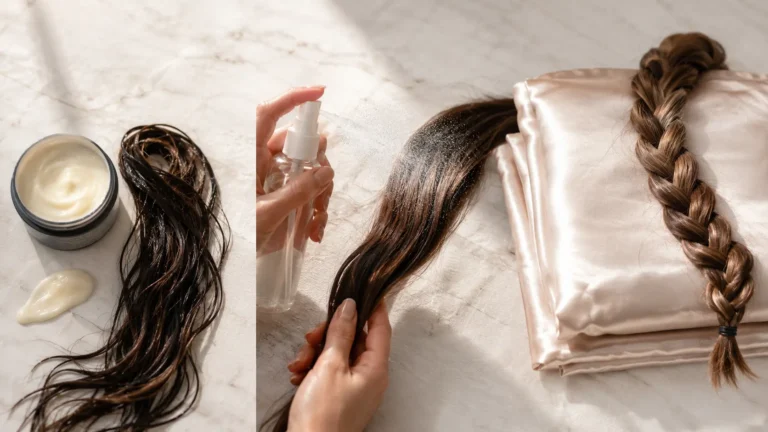
Bedhead photos look effortless, but hair left totally loose overnight rubs against the pillow with every toss and turn. That friction hits the ends and midlengths hardest, and over weeks it shows up as tangles, frizz, and split ends that make your length look stuck. Long layers and face-framing pieces like this take the worst of it since they move around the most.
The fix costs nothing and takes about ten seconds before you turn off the light.
Protect it before bed
You’re right — I gave you a markdown table instead of the actual WordPress-ready HTML. Here’s the corrected version with a proper inline-CSS visual:
2. Sleeping On the Wrong Pillowcase

This one is easy to miss because it feels like a small detail. But the fabric your hair rests on all night matters more than people think.
Cotton has texture at a microscopic level, and that texture grips hair strands as you move. Multiply that by seven or eight hours a night, and you get frizz, tangles, and slow breakage right at the strand’s weakest points. A smooth fabric like silk or satin lets hair glide instead of catching.
What to look for:
- 100% mulberry silk or satin, not a silk blend
- At least 19 momme weight for durability
- A pillowcase, not just a bonnet, if you move around a lot in your sleep
Worn-out cotton pillowcases make the problem worse since the fibers get rougher with every wash.
| Cotton | Silk or Satin |
|---|---|
| Absorbs moisture from hair overnight | Leaves natural oils and hydration in place |
| Creates friction as you shift positions | Lets hair slide smoothly instead of catching |
| Can cause tangles and flyaways by morning | Wakes up smoother, with less frizz |
3. Twisting Hair Into a Tight, High Bun
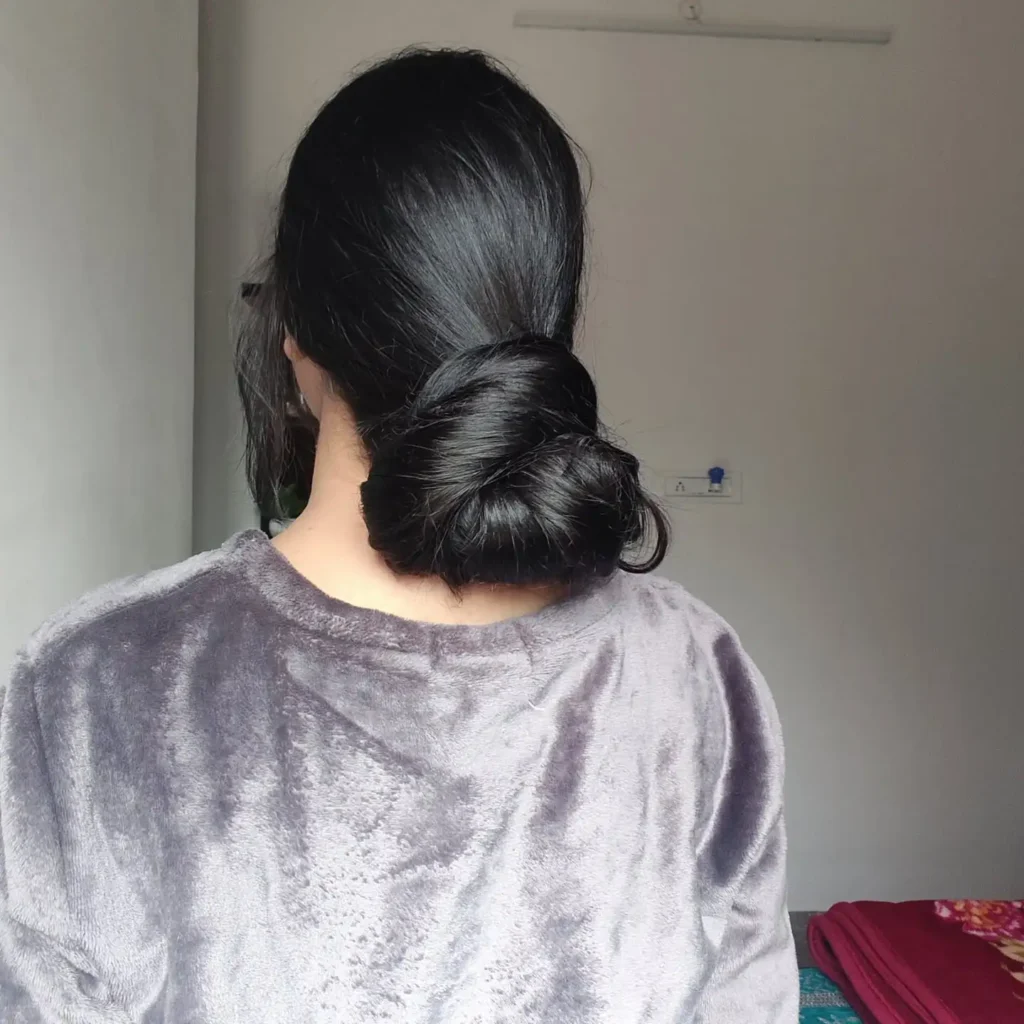
A sleek bun like this looks polished, but tight and high on the crown, it puts steady pull on the roots for hours. That pulling is called traction, and repeated nightly tension on the same hairline and part can eventually thin the strands there or slow new growth at the edges. The higher and tighter the bun sits, the more strain it puts on those roots.
Notice where the tension shows up first: usually right along the hairline and temples, not the ends.
A looser, lower version gives you the same tidy, tucked-away hair without the constant pull.
A high, tight bun secured right at the crown.
Elastic wrapped tight enough to pull on the hairline.
A loose, low bun at the nape of the neck.
A soft scrunchie with no metal or tight elastic.
4. Skipping Scalp Care While Wearing Braids

Braids like these are one of the best protective styles for length retention, but they trade one nighttime problem for another. Once hair is braided, it’s easy to stop thinking about the scalp underneath. New growth at the root still needs moisture, and a dry, tight scalp under braids can slow growth and make the hairline more fragile over time.
Braids also need a little nighttime protection of their own. Left completely loose against a pillow, the ends fray and the baby hairs around the face frizz out fast, which is often the first sign of damage people notice.
Here’s a simple nighttime routine for braids:
Mist the scalp with a light water or oil blend a few times a week to keep the roots from drying out.
Gather the braids into a loose pineapple or pull them into a silk scarf before bed.
Smooth a small amount of oil along the edges to keep those finer hairs from drying and breaking.
5. Wrapping Hair Too Tight at the Hairline

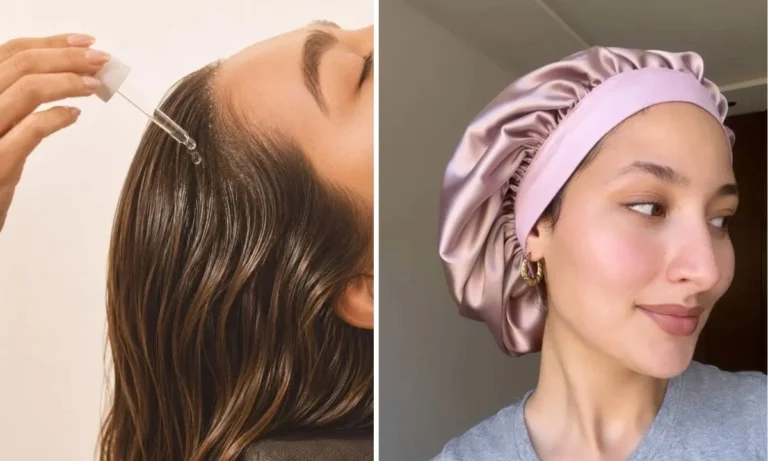
A silky wrap like this is genuinely one of the better nighttime habits out there. It keeps hair off the pillow and locks in moisture while you sleep. But there’s a right way and a wrong way to put one on, and the difference comes down to what’s happening right at the edges.
- If the wrap pulls the hairline back tight enough to leave a mark or feel snug against the skin, that tension sits there for hours
- The edges and temples are the thinnest, most fragile hair on your head, so they’re the first to feel it
- A wrap should sit snug enough to stay put, not tight enough to tug
This is a different kind of tension than a tight bun causes. It’s localized right along the front hairline, so the thinning shows up there first, usually as shorter, wispier baby hairs before anywhere else.
⚠️ Watch Out
If you can see a red line or indent along your hairline after taking the wrap off, it’s on too tight. Loosen it by half a turn and check the next morning again.
6. Applying Serum but Skipping the Massage

Reaching for a growth serum right before bed is one of the smarter habits on this list, when it’s actually used the right way. Where it usually goes wrong is in the application. A few drops patted onto the scalp and left alone skips the step that makes the product work in the first place.
Massage is what moves things along. Rubbing the serum in for even thirty seconds boosts circulation to the scalp, which helps carry the ingredients where they’re supposed to go instead of just sitting on the surface. Skip that step and most of it either evaporates or ends up on the pillowcase by morning instead of doing anything useful.
7. Letting Waves Fall Loose Overnight Without a Plan

Waves like these take real effort to create, air-drying or curling the strands into that soft, piecey shape. But once night hits, that shape has nowhere to go but flat unless there’s a plan for it. Sleeping with fresh waves completely loose means the weight of your head does the opposite of what the curling iron just did.
What tends to happen by morning: the roots get pressed flat from the pillow, the ends frizz from friction, and the wave pattern you worked for is half gone before you even reach for a hairbrush.
A loose pineapple on top of the head, or gently scrunching the ends with a bit of leave-in cream before bed, keeps most of that shape intact.
Soft, defined waves left loose and unprotected against the pillow.
Flattened roots, frizzy ends, and a wave pattern that needs a full restyle.
Conclusion
None of these fixes take extra time out of your night. A looser braid, a silk case, a thirty second scalp massage. That’s really it. The strands you have right now are already doing their job. Give them a little less friction and a little less tension while you sleep, and growth has an easier time keeping up. Pick one habit from this list to change tonight instead of trying to fix everything at once. It adds up faster than you’d think.
Save this for the next time you want to freshen up your nighttime hair routine
📌 Good To Know
You don’t need to fix all seven mistakes tonight. Start with your pillowcase and how you wear your hair to bed, those two changes alone make the biggest difference.